The monthly talks help by the Northern Group in Chiang Mai are Chiang Mai's principal intellectual fare. I've only attended one, by Niels Mulder, discoursing on his scandalous and unpublishable life as a young anthropologist in Bangkok during the 1960s.
The talks are held on the second Tuesday of each month at the Alliance Française across the street from the L'Ecole d'Extreme Orient in Chiang Mai. The history of group began way back in 1972 with the short-lived Northern Thai Society modeled along the lines of the Siam Society. The current group began in 1984. There are synopses of the talks in the Meeting Diary. There is a nice summary of the presentation on Champa by Michael Vickery:
"Introduction to the history and significance of Champa"
A talk by Michael Vickery
254th meeting - Tuesday 9th November 2004
Thursday, April 12, 2007
Searchable Greek inscriptions library
An searchable online library of inscriptions that might serve as an example in some respects for a library of Burmese inscriptions. Part of the Cornell Greek Epigraphy Project. There are no online translation and glossary though.

AEFEK: Association d'Echanges et de Formation pour les Etudes Khmeres
Site highlights the great amount of research that is currently being written in the French language on Khmer history and culture. Extensive bibliographies and papers freely downloadable. Like most contemporary French work, unique in showing a deep respect and appreciation for the history and traditions of historical research, as opposed to obligatory undiscerning blanket criticism of scientific method and BEFEO research as "Orientalism" [Example]. Such an association for Khmer Studies, which concentrates on Ancient Khmer history rather than contemporary politics, would be nice for Burmese history also.
Content
1. Inventories of Khmer manuscripts in French libraries [Link]
2. Lectures on Angkor and pre-Angkor (c. 1902-1930) [Link]
3. Bulletin de l'AEFEK (since 1999) [Link]
4. A page with biographies of Khmer scholars of Khmer [Link]
5. Links
Content
1. Inventories of Khmer manuscripts in French libraries [Link]
2. Lectures on Angkor and pre-Angkor (c. 1902-1930) [Link]
3. Bulletin de l'AEFEK (since 1999) [Link]
4. A page with biographies of Khmer scholars of Khmer [Link]
5. Links
Saturday, March 31, 2007
Vickery on Coedes' history of Cambodia
Vickery, Michael (2000) "Coedes' histories of Cambodia," Silpakorn University International Journal, 1, 1: 61-108, cited in Baker, Chris (2003) "Ayutthaya Rising: From Land or Sea?," Journal of Southeast Asian Studies, 34 (1), pp. 41-62 February 2003. [Sadly, the only paper I can find citing it]
I bought Coedes' The Indianized States of Southeast Asia (1968) a long, long time ago and subsequently lost it and really didn't miss it much at all.
I bumped into it again recently and was quite impressed by its regional approach to history during the Mongol era (c. 1250-1350)(Luce, 1958, 1959). It seemed, to my undiscerning eye, to be striving for some overall cross-regional coherence in the interpretation of this period. It even seemed to me that Vickery might have been adulating Coedes regional perspective, based on the following quote:
Then it came as quite a surprise to me to find that Vickery had written a whole paper on Coedes where he picked him apart, albeit mercifully, and exposed his faults. So I am beginning to do what I vowed to do (after my work at the newspaper each day):
There seems to be an essence of methodology for dealing with the socio-cultural dimensions of inscriptional evidence in Vickery's work that is applicable to the Burmese history of the Ava period (c. 1364-1555) (that I am working on) as well. There is a wealth of admonitions about the way that sources should and should not be used from a scientific standpoint. The inscriptional evidence should probably in some sense provide a foundation or infrastructure for the abundant chronicle evidence for the Ava period.
I know the word "scientific" would make the more deconstructionist historians bristle with contempt and horror, but Vickery’s work, though based firmly on traditional Rankean "what actually happened" or "the way it actually was" also admits that historical sources are contingent artifacts of their creators that makes historical interpretation for many periods intrinsically indeterminate.
Vickery likes science. He notes, that new information must be integrated and our theories adjusted, even if it forces a change in our preconceptions. (Vickery, 2000, 102) One can even entertain more than one theory, Vickery often does, ranking them relative to their likelihood. This is a Bayesian model of science.
Narrative history can also be adjusted. There is no real reason for narrative history to be a mere linear rendition of battles from the perspective of one court. Braudel by layering history into levels of short-term to long-term causal factors (infrastructure; structure – economics, politics, social organisation; superstructure, see Ferguson, 1998) provides a framework for writing thick history in the sense of Geertz’s thick descriptio, thick narratives of events, thick in the sense that background information about economics, politics, culture, and social organisation are interleaved with the narrative.
Vickery holds that students should be "introduced directly to the primary sources, rather than having to guess at what they record via the interpretation of Coedes [general history]." Translation accompanied by critical assessments and annotations need to be valorized above historical interpretations. “I refer to Coedes but teach original sources," he notes.
The fact that Burmese history still relies on Harvey (1925) and Phayre (19th century) is quite sad. Vickery makes a distinction between "academic works" and "popularizations."
He provides an example of over-synthesis from the history of Funan (page 71-72) that I will have to untangle in the future. Remarking of Coedes' books:
No doubt, he would find my attempts at synthesis too thin on the critical side. Vickery’s work certainly provides an abundant corpus of examples of source criticism. His magnum opus (Vickery, 1998) is the best place to begin.
References:
Coedes, George (1968) The Indianized States of Southeast Asia, Honolulu: University of Hawaii Press. [Google Books]
Ferguson, Brian R (1999). "A Paradigm for the Study of War and Society," cited in Raaflaub, Kurt and Nathan Rubinstein (eds.). (1999). War and Society in the Ancient and Medieval Worlds: Asia, The Mediterranean, Europe, and Mesoamerica, Center
for Hellenic Studies. Cambridge, Massachusetts: Harvard University Press.
Luce, Gordon Hannington (1958). "The Early Syam in Burma’s History." Journal of the Siam Society 46 (1958): 123-214.
Luce, Gordon Hannington (1959). "The Early Syam in Burma’s History: A Supplement." Journal of the Siam Society 47.1 (1959): 59-101.
Vickery, Michael (1998) Society, Economics, and Politics in pre-Angkor Cambodia, Tokyo: Toyo Bunko."
Vickery, Michael (2004) "Cambodia and Its Neighbors in the 15th Century," ARI Working Paper No. 27, June 2004, www.ari.nus.edu.sg/pub/wps.htm.
I bought Coedes' The Indianized States of Southeast Asia (1968) a long, long time ago and subsequently lost it and really didn't miss it much at all.
I bumped into it again recently and was quite impressed by its regional approach to history during the Mongol era (c. 1250-1350)(Luce, 1958, 1959). It seemed, to my undiscerning eye, to be striving for some overall cross-regional coherence in the interpretation of this period. It even seemed to me that Vickery might have been adulating Coedes regional perspective, based on the following quote:
"In studying the Hsien-Ayutthaya-Martaban-Pegu-central northern Menampolities and the relations between Ayutthaya and Cambodia, it might be helpful to bracket out entirely conceptions of modern boundaries and think rather of an area of ancient common cosmopolitan culture and constantly shifting alliances." (Vickery,2004, 23-24)
Then it came as quite a surprise to me to find that Vickery had written a whole paper on Coedes where he picked him apart, albeit mercifully, and exposed his faults. So I am beginning to do what I vowed to do (after my work at the newspaper each day):
Start systematizing Vickery's approach to the socio-cultural imformation embedded in inscriptions and apply them to Burmese history.
There seems to be an essence of methodology for dealing with the socio-cultural dimensions of inscriptional evidence in Vickery's work that is applicable to the Burmese history of the Ava period (c. 1364-1555) (that I am working on) as well. There is a wealth of admonitions about the way that sources should and should not be used from a scientific standpoint. The inscriptional evidence should probably in some sense provide a foundation or infrastructure for the abundant chronicle evidence for the Ava period.
I know the word "scientific" would make the more deconstructionist historians bristle with contempt and horror, but Vickery’s work, though based firmly on traditional Rankean "what actually happened" or "the way it actually was" also admits that historical sources are contingent artifacts of their creators that makes historical interpretation for many periods intrinsically indeterminate.
Vickery likes science. He notes, that new information must be integrated and our theories adjusted, even if it forces a change in our preconceptions. (Vickery, 2000, 102) One can even entertain more than one theory, Vickery often does, ranking them relative to their likelihood. This is a Bayesian model of science.
Narrative history can also be adjusted. There is no real reason for narrative history to be a mere linear rendition of battles from the perspective of one court. Braudel by layering history into levels of short-term to long-term causal factors (infrastructure; structure – economics, politics, social organisation; superstructure, see Ferguson, 1998) provides a framework for writing thick history in the sense of Geertz’s thick descriptio, thick narratives of events, thick in the sense that background information about economics, politics, culture, and social organisation are interleaved with the narrative.
Vickery holds that students should be "introduced directly to the primary sources, rather than having to guess at what they record via the interpretation of Coedes [general history]." Translation accompanied by critical assessments and annotations need to be valorized above historical interpretations. “I refer to Coedes but teach original sources," he notes.
The fact that Burmese history still relies on Harvey (1925) and Phayre (19th century) is quite sad. Vickery makes a distinction between "academic works" and "popularizations."
"…popular treatments …should present, in non-specialist language for the general literate public, the results of the best scientific work. They should not simply seek to entertain or be vehicles for speculative reconstructions which would not past muster if presented the same way in an academic journal." (63)
He provides an example of over-synthesis from the history of Funan (page 71-72) that I will have to untangle in the future. Remarking of Coedes' books:
"They are monuments of uncritical synthesisation, some of which belongs in historical romance, not in history. Coedes was a great synthesizer – indeed that may have been his greatest talent when functioning as a writer of historical accounts; and he had to find, or imagine, a connection between every detail and some other detail in time and place." (63)
"The problem was in assumptions and presuppositions, not in any lack of sources. Coedes’ historical syntheses, which were the basis for most subsequent work, including Soviet studies, contains defects which were of course not because he was unaware of the content of the inscriptions, but because of the theoretical framework, possibly unconscious, which he imposed on them. This was a view in which history genealogical, narrowly political, and narrative, and it would not be sufficient, in fact, it would probably be impossible, to extract the additional information from the inscriptions in a coherent manner without a new theoretical framework." (64)
No doubt, he would find my attempts at synthesis too thin on the critical side. Vickery’s work certainly provides an abundant corpus of examples of source criticism. His magnum opus (Vickery, 1998) is the best place to begin.
References:
Coedes, George (1968) The Indianized States of Southeast Asia, Honolulu: University of Hawaii Press. [Google Books]
Ferguson, Brian R (1999). "A Paradigm for the Study of War and Society," cited in Raaflaub, Kurt and Nathan Rubinstein (eds.). (1999). War and Society in the Ancient and Medieval Worlds: Asia, The Mediterranean, Europe, and Mesoamerica, Center
for Hellenic Studies. Cambridge, Massachusetts: Harvard University Press.
Luce, Gordon Hannington (1958). "The Early Syam in Burma’s History." Journal of the Siam Society 46 (1958): 123-214.
Luce, Gordon Hannington (1959). "The Early Syam in Burma’s History: A Supplement." Journal of the Siam Society 47.1 (1959): 59-101.
Vickery, Michael (1998) Society, Economics, and Politics in pre-Angkor Cambodia, Tokyo: Toyo Bunko."
Vickery, Michael (2004) "Cambodia and Its Neighbors in the 15th Century," ARI Working Paper No. 27, June 2004, www.ari.nus.edu.sg/pub/wps.htm.
Friday, March 30, 2007
Bertil Lintner takes Susan Conway's new to task on "Shan" history
Conway, Susan (2006) The Shan: Culture, Arts, and Crafts, River Books, Bangkok. [Lintner's Review]
The book excels when it covers the author's areas of expertise:
But falls short in the areas of history:
Bertil Linter also whets the readers appetite with tidbits of a topic that has yet to be delved into by historians yet (that I'm aware of) the Kachin expansion into region north of Upper Burma, the modern day Kachin State. The Kachins "migrated less than 300 years ago into the northern parts of what today is Burma, and, according to Ola Hansson, the Swedish-American missionary who managed to convert many Kachins to Christianity and gave them a written language:
The book excels when it covers the author's areas of expertise:
"Conway’s chapters about Shan weaving and dyeing, embroidery, lacquer ware, Shan genealogy and Buddha images, as well as her detailed notes about Shan script and palm leaf manuscripts are extremely informative. Conway also describes in great detail the patterns and meanings of Shan tattoos. So don’t be discouraged by the book’s shortcomings. If you ignore the historical and ethnological parts it’s well worth reading."
But falls short in the areas of history:
"...the Shan do not refer to themselves as Tai Yai—they call themselves Tai, which in China is romanized as Dai. Thaiyai, not Tai Yai, is the name given to them by their ethnic Thai cousins in Thailand who traditionally have believed that the Shan were their ancestors (yai means big or great.)
"Kachin chiefs did nor rule Hkamti Long, which was a Shan state in the Kachin-dominated area of the far north of Burma. The Shan state of Yawnghwe is not “called Nyaungshwe by the Shan and Yawnghwe by the Burmese.” It is the other way round. Yawnghwe is Shan for the valley, or gorge of rice storages. Nyaungshwe is simply a Burmese corruption of the Shan name.
Bertil Linter also whets the readers appetite with tidbits of a topic that has yet to be delved into by historians yet (that I'm aware of) the Kachin expansion into region north of Upper Burma, the modern day Kachin State. The Kachins "migrated less than 300 years ago into the northern parts of what today is Burma, and, according to Ola Hansson, the Swedish-American missionary who managed to convert many Kachins to Christianity and gave them a written language:
“Having obtained a foothold, the conquest of the whole region between the Khamti (Hkamti) and Hukong (Hukawng) valleys, as far south as to the Mogaung river, followed in due time. The Shans and Burmans were driven out, and only the ruins of their pagodas, the trees planted around their monasteries, and the names of their villages remained to tell the story of fierce fighting and wholesale slaughter.”
"The southward movement of the Kachin was halted only when the British colonial power began to subdue the area in the late 19th century. Thus, the question of ethnicity in Burma is not merely, or simply, about the majority Burmans versus the country’s plethora of minorities. Age-old divisions and conflicts also exist between the various non-Burman nationalities, which makes the ethnic issue in Burma far more complex than most foreign analysts assume, and a solution much harder to find than just referring to “the struggle against greater-Burman hegemonism,” as many of the leaders of the minorities often do.
Thursday, March 29, 2007
What philology means to some people
Thomas, Richard G. (2006) "Philology in Viet Nam and its Impact on Southeast Asian Cultural History," Modern Asian Studies, 40, 2, pp. 477-515.
The above paper reads like a witch hunt.
It claims there are problems with the work of the Ecole Francaise d'Extreme Orient and several historians including Michael Vickery, but presents absolutely no evidence to support its contention. The paper merely hurls grandiouse accusations, like this one:
Not even a citation of a page!
First of all, the sort of philology that historians like Michael Vickery employ has been the standard historical methodology used since the time of Ranke. It is the same sort of methodology that one finds in the Warring States Project at University of Massachusetts at Amherst, for instance.
A sceptical Rankean approach towards sources with an eye towards finding "what actually happened" is, of course, not the only possible legitimate goal. Historical texts can be appreciated as literature also, the authors of each subsequent text borrowing from previous authors.
It is worth taking a closer look at the Vickery quote above:
1. western scientists who cling to the notion that the relationship between signifier and signified is not arbitrary
[If it was arbitrary, it would be meaningless. People compose and interpret texts with intentions which are not arbitrary.]
3. That the truth of Southeast Asian archaeology can be grasped in its entirety by the application of hard-nosed philological principles.
[Who claims anything can be grasped in its entirety? What Vickery does is hypothesise about the processes that might have been involved in the creation of a text. We are free to disagree with him and present reasons why we disagree.
Philological tools are what one uses to make sense of the way historical texts were constructed from initial authoring through hundreds of years of subsequent copying.
Initially, hypotheses should be stated clearly and without a lot of qualifications. Later on, if the hypothesis does not hold up under the evidence, the hypothesis is qualified. One thing is for sure, the writer of the above does not look at any of the relevant evidence for the claims they are making, namely the actual methods used by actual historians like Vickery.]
Apparently, the reason it was published was that it claimed to be a rebuttal to a previous work which it claims:
I leave you with one last quote:
First of all, if translations of texts from non-western cultures and histories were valued more by western academia, then non-western could be contemplated and appreciated more, but finding the universal in the particular does not in itself devalue the particular.
Or this very strange sentence that requres the reader to take an excursion into the very convolutions of the author's brain:
People like Coedes collected and preserved huge amounts of linguistic, inscriptional, and art historical data. They studied this material in detail and published prolifically. Something that most contemporary scholars don't seem to be able to get up the will power to do. Like Vickery deserve to at least have their work looked at in detail before subjecting it to criticism.
The above paper reads like a witch hunt.
It claims there are problems with the work of the Ecole Francaise d'Extreme Orient and several historians including Michael Vickery, but presents absolutely no evidence to support its contention. The paper merely hurls grandiouse accusations, like this one:
"...those western scientists who cling to the notion that the relationship between signifier and signified is not arbitrary, and therefore that the truth of Southeast Asian archaeology can be grasped in its entirety by the application of hard-nosed philological principles. (98)..."
"98) M Vickery, Society, Economics, and Politics in pre-Angkor Cambodia (Tokyo, 1998)"
Not even a citation of a page!
First of all, the sort of philology that historians like Michael Vickery employ has been the standard historical methodology used since the time of Ranke. It is the same sort of methodology that one finds in the Warring States Project at University of Massachusetts at Amherst, for instance.
A sceptical Rankean approach towards sources with an eye towards finding "what actually happened" is, of course, not the only possible legitimate goal. Historical texts can be appreciated as literature also, the authors of each subsequent text borrowing from previous authors.
It is worth taking a closer look at the Vickery quote above:
1. western scientists who cling to the notion that the relationship between signifier and signified is not arbitrary
[If it was arbitrary, it would be meaningless. People compose and interpret texts with intentions which are not arbitrary.]
3. That the truth of Southeast Asian archaeology can be grasped in its entirety by the application of hard-nosed philological principles.
[Who claims anything can be grasped in its entirety? What Vickery does is hypothesise about the processes that might have been involved in the creation of a text. We are free to disagree with him and present reasons why we disagree.
Philological tools are what one uses to make sense of the way historical texts were constructed from initial authoring through hundreds of years of subsequent copying.
Initially, hypotheses should be stated clearly and without a lot of qualifications. Later on, if the hypothesis does not hold up under the evidence, the hypothesis is qualified. One thing is for sure, the writer of the above does not look at any of the relevant evidence for the claims they are making, namely the actual methods used by actual historians like Vickery.]
Apparently, the reason it was published was that it claimed to be a rebuttal to a previous work which it claims:
"The research [sic] presented here questions Bayly's suggestion that the scholarly output of the EFEO provided positive influences for the thought patterns of young revolutionary Vietnamese intellectuals in their struggle to overthrow the colonial regime." (page 478)
I leave you with one last quote:
"Like Alexander, who showed his love of Pindar, the philologist denied the existence of anything of cultural value in Indo-China except Indo-European culture."
First of all, if translations of texts from non-western cultures and histories were valued more by western academia, then non-western could be contemplated and appreciated more, but finding the universal in the particular does not in itself devalue the particular.
Or this very strange sentence that requres the reader to take an excursion into the very convolutions of the author's brain:
Whether all of them were aware of it or not, the professional philological scientists who worked in Southeast Asia were involved in an experimental project whose goal was to redefine Orientalism as a scientific form of Hellenism." (498)
People like Coedes collected and preserved huge amounts of linguistic, inscriptional, and art historical data. They studied this material in detail and published prolifically. Something that most contemporary scholars don't seem to be able to get up the will power to do. Like Vickery deserve to at least have their work looked at in detail before subjecting it to criticism.
Wednesday, March 28, 2007
Sealang.net for Burmese language dictionary and corpus
Includes a Burmese language corpus and dictionary. They are starting to put the papers of the great historian of Burma G.H. Luce online. Right now only the papers regarding Mon linguistics are online.
As far as the language of historical texts goes, the emphasis is on the language of inscriptions in the SEAclassics project (often difficult to figure out, requireing specialised dictionaries):
Don't forget to read the intro for students before you begin
As far as the language of historical texts goes, the emphasis is on the language of inscriptions in the SEAclassics project (often difficult to figure out, requireing specialised dictionaries):
"Southeast Asia's golden age of epigraphy spans more than a millennium, from the 5th through the 15th centuries. The SEAclassics Library of epigraphic texts, Indic and epigraphic dictionaries, and research-oriented software tools will make this widely scattered body of work, including the Cham, Mon, Khmer, Pyu, Burmese, and Tai inscriptional corpora, accessible to the international scholarly community. A demonstration of the Corpus of Khmer Inscriptions is available on line."
Don't forget to read the intro for students before you begin
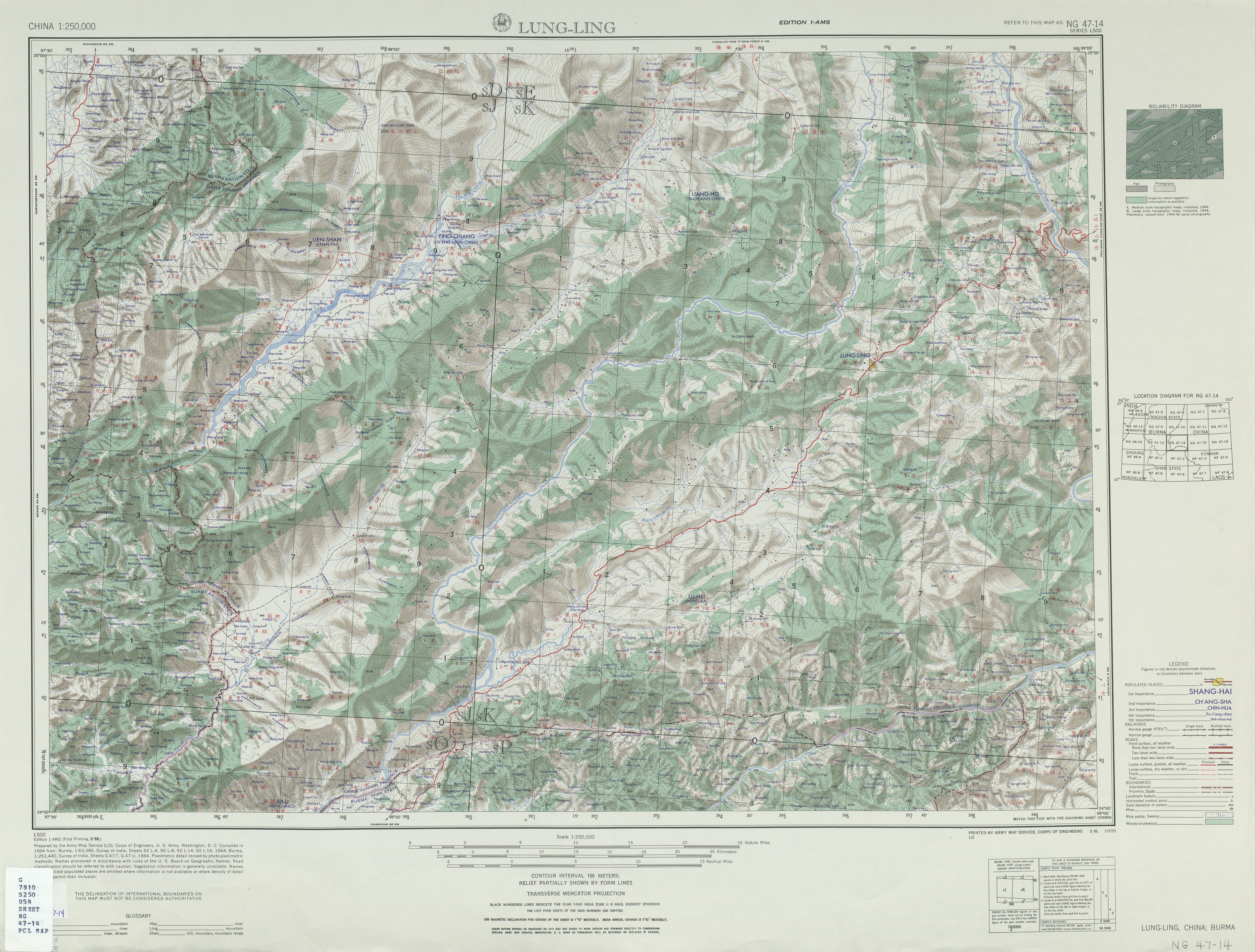
Topographical Maps for Burma-Yunnan border area
Highly detailed topographical maps for Burma and Yunnan:
1. China and Yunnan
Mong Mao is on this map. This set of maps is certainly in need of a better index. Will have to work on one myself. A better map reader than internet explorer's zoom capbility is needed too. Would be nice to make a more detailed map than Wade's Ming Shi-lu map that shows the role that topography played in history.
2. Burma
Maps:
NC 47-2 Bokpyin (4.4 MB)
NC 47-6 Kra Buri (4.6 MB)
ND 46-4 Ama (3.9 MB)
ND 47-2 Ye (6.2 MB)
ND 47-6 Tavoy (5.8 MB)
ND 47-10 Palauk 1959 ed. (5.8 MB)
ND 47-10 Palauk 1962 ed. (4.9 MB)
ND 47-14 Mergui (4.6 MB)
NE 46-3 Kyaukpyu (6.5 MB)
NE 46-4 Thayetmyo (6.6 MB)
NE 46-7 Sandoway (5.0 MB)
NE 46-8 Prome (6.9 MB)
NE 46-12 Henzada (6.6 MB)
NE 46-15 Sinma (3.8 MB)
NE 46-16 Bassein (6.3 MB)
NE 46-16 Bassein and Vicinity [verso] (961K)
NE 47-1 Pyinmana (6.9 MB)
NE 47-5 Toungoo (6.8 MB)
NE 47-9 Pegu (6.3 MB)
NE 47-13 Rangoon (5.6 MB)
NE 47-13 Rangoon and Vicinity [verso] (1.1 MB)
NE 47-14 Moulmein (6.2 MB)
NF 46-3 Mawlaik (6.5 MB)
NF 46-4 Wuntho (6.4 MB)
NF 46-7 Gangaw (6.2 MB)
NF 46-8 Shwebo (5.9 MB)
NF 46-10 Cox's Bazar (5.9 MB)
NF 46-11 Mount Victoria (6.4 MB)
NF 46-12 Myingyin (5.7 MB)
NF 46-14 Akyab (4.1 MB)
NF 46-15 Myohaung (6.6 MB)
NF 46-16 Yenangyaung (6.1 MB)
NF 47-1 Mong Mit (6.6 MB)
NF 47-2 Hsenwi (6.4 MB)
NF 47-5 Maymyo (6.4 MB)
NF 47-6 Mong Yai (6.5 MB)
NF 47-9 Mandalay (6.3 MB)
NF 47-9 Mandalay, Burma and Vicinity [verso] (1.6 MB)
NF 47-10 Lai-Hka (6.2 MB)
NF 47-11 Keng Tung (6.7 MB)
NF 47-11 reliability diagram, notes, glossary [verso] (1.1 MB)
NF 47-13 Yamethin (6.4 MB)
NF 47-14 Mong Pan (6.7 MB)
NG 46-8 Sibsagar (5.7 MB)
NG 46-12 Tamanthi (5.4 MB)
NG 46-16 Paungbyin (5.9 MB)
NG 47-1 Putao (6.1 MB)
NG 47-5 Maingkwan (5.9 MB)
NG 47-9 Myitkyina (5.9 MB)
NG 47-13 Bhamo (5.9 MB)
1. China and Yunnan
Mong Mao is on this map. This set of maps is certainly in need of a better index. Will have to work on one myself. A better map reader than internet explorer's zoom capbility is needed too. Would be nice to make a more detailed map than Wade's Ming Shi-lu map that shows the role that topography played in history.
2. Burma
Maps:
NC 47-2 Bokpyin (4.4 MB)
NC 47-6 Kra Buri (4.6 MB)
ND 46-4 Ama (3.9 MB)
ND 47-2 Ye (6.2 MB)
ND 47-6 Tavoy (5.8 MB)
ND 47-10 Palauk 1959 ed. (5.8 MB)
ND 47-10 Palauk 1962 ed. (4.9 MB)
ND 47-14 Mergui (4.6 MB)
NE 46-3 Kyaukpyu (6.5 MB)
NE 46-4 Thayetmyo (6.6 MB)
NE 46-7 Sandoway (5.0 MB)
NE 46-8 Prome (6.9 MB)
NE 46-12 Henzada (6.6 MB)
NE 46-15 Sinma (3.8 MB)
NE 46-16 Bassein (6.3 MB)
NE 46-16 Bassein and Vicinity [verso] (961K)
NE 47-1 Pyinmana (6.9 MB)
NE 47-5 Toungoo (6.8 MB)
NE 47-9 Pegu (6.3 MB)
NE 47-13 Rangoon (5.6 MB)
NE 47-13 Rangoon and Vicinity [verso] (1.1 MB)
NE 47-14 Moulmein (6.2 MB)
NF 46-3 Mawlaik (6.5 MB)
NF 46-4 Wuntho (6.4 MB)
NF 46-7 Gangaw (6.2 MB)
NF 46-8 Shwebo (5.9 MB)
NF 46-10 Cox's Bazar (5.9 MB)
NF 46-11 Mount Victoria (6.4 MB)
NF 46-12 Myingyin (5.7 MB)
NF 46-14 Akyab (4.1 MB)
NF 46-15 Myohaung (6.6 MB)
NF 46-16 Yenangyaung (6.1 MB)
NF 47-1 Mong Mit (6.6 MB)
NF 47-2 Hsenwi (6.4 MB)
NF 47-5 Maymyo (6.4 MB)
NF 47-6 Mong Yai (6.5 MB)
NF 47-9 Mandalay (6.3 MB)
NF 47-9 Mandalay, Burma and Vicinity [verso] (1.6 MB)
NF 47-10 Lai-Hka (6.2 MB)
NF 47-11 Keng Tung (6.7 MB)
NF 47-11 reliability diagram, notes, glossary [verso] (1.1 MB)
NF 47-13 Yamethin (6.4 MB)
NF 47-14 Mong Pan (6.7 MB)
NG 46-8 Sibsagar (5.7 MB)
NG 46-12 Tamanthi (5.4 MB)
NG 46-16 Paungbyin (5.9 MB)
NG 47-1 Putao (6.1 MB)
NG 47-5 Maingkwan (5.9 MB)
NG 47-9 Myitkyina (5.9 MB)
NG 47-13 Bhamo (5.9 MB)
Pictures of new Myanmar capital Nay-pyi-daw
Pictures of the new Burmese capital Naypyidaw are to be found in the pages of a blog authored by the deputy editor of the Indian newspaper named The Hindu, Sidharth Varadarajan.
The buildings bear an uncanny resemblance to Mae Fah Luang University in Chiang Rai, Thailand that I taught at for two years, a university that was built by squatter camps full of Burmese migrant workers, by the way.
Varadarajan's blog also has a section devoted to Myanmar.
The buildings bear an uncanny resemblance to Mae Fah Luang University in Chiang Rai, Thailand that I taught at for two years, a university that was built by squatter camps full of Burmese migrant workers, by the way.
Varadarajan's blog also has a section devoted to Myanmar.
Thursday, March 22, 2007
Money in Yunnan during the Ming (c. 1350-1600)
Macroeconomics in pre-modern southeast Asian economies besides lacking data can also be quite conceptually complex. Take Yunnan, for instance. Several currencies existed, yet markets hardly existed. The currencies included:
Stylized facts provide some hints about the role markets and money played in Yunnan:
What was happening with all these moneys is an open historical question and requires getting back to fundamental intuitions about the function of money that Brad DeLong touched upon in his blog recently:
Sam Brittan writes:
Ha! I'm going to tell you whether you want me to tell you or not!
There are three possibilities. The check could serve as an expansion of the real money supply, if it is sufficiently easier to carry around and keep track of then previous moneys--previous markers of claims to purchasing power. If so, then nobody pays for the traveller's meal: the traveller's writing the check increased social wealth by more than the resources consumed, and everybody is better off. It is a free lunch.
A second possibility is that the check--being easier to carry around and keep track of--could crowd out and displace some other asset used as money. Say that the nominal (and real) money supplies remain fixed, and that the circulation of the check means that somebody loses their job stringing cowrie shells together, and has to get another lower-paying lower-value job doing something else. In this case, part of the lunch is paid for by the dismissed worker who loses his or her best opportunity. The rest of the lunch, however, is still free.
A third possibility, however, is that the check increases the nominal but not the real money supply. People are happy to hold the check, but the check is no easier to use than other forms of money, which are in fixed supply. In this case the price level rises, and everybody else with money in their pockets finds that their money buys less. In this case their is no free lunch: the lunch is paid for by an inflation tax implicitly levied on other money holders.
Those are the three possible answers. There will be a test.[Source]
Brook, Timothy "The Merchant Network in 16th Century China: A discussion and translation of Zhang Han’s 'On Merchants'," Journal of Economic and Social History of the Orient, Vol. XXIV, Part II, pages 165-214.
Sun, Laichen (2000). Ming-Southeast Asian overland interactions, c. 1368-1644. Unpublished PhD Dissertation, University of Michigan.
Vogel, Hans Ulrich (1993). "Cowry trade and its role in the economy of Yunnan: From the ninth to the mid-seventeenth century," Journal of the Economic and Social History of the Orient, 36, 3 (1993): 211-252; 36, 4 (1993): 309-353.
Wade, Geoff. tr (2005). Southeast Asia in the Ming Shi-lu: an open access resource, Singapore: Asia Research Institute and the Singapore E-Press, National
University of Singapore, [http://epress.nus.edu.sg/msl]
1. The Ming emperor injecting paper money into the economy with the money he gives to the tribute missions of different ethnic groups to the capital. Can be seen in the tribute entries of Wade's (2005) translation of the Ming Shi-lu.
2. The longstanding use of cowries imported from the south until the 1700s. Covered in the work of Vogel (1993).
3. Most importantly silver produced in Yunnan and used throughout China. Covered in detail in Sun Lai-chen's (2000) dissertation.
4. Copper cash also, probably.
Stylized facts provide some hints about the role markets and money played in Yunnan:
"Yunnan has peaks upon peaks of mountain ranges and swift gorges winding through them. In the central region where the capital is, the land is well-watered and abounds in food-stuffs. This place does not rely on merchants, yet merchants gather here because it is a place where cinnabar, red mercury, glittering stones, and precious stones are produced. The lands of Linan, Dali, Yongning, Heqing, and Chuxiong can claim to be fertile, but the merchants are extremely few. Such places as Yuanjiang, Lincang, Yongchang, and Lijiang border on foreign territories; their customs are contrary and different." (Brook, 203)
“Comment: The long and difficult routes from Yunnan to the rest of China made the transport of anything but lightweight luxuries prohibitive. Yunnan was an important source of gems, and there were heavy proscriptions against non-imperial trading in gems with the local people (footnote 35: The involvement in eunuchs in this trade is mentioned in the biography of Wang Shu in the Dictionary of Ming Biography)” (Brook, 203-204)
What was happening with all these moneys is an open historical question and requires getting back to fundamental intuitions about the function of money that Brad DeLong touched upon in his blog recently:
Sam Brittan writes:
FT.com / Columnists / Samuel Brittan - Money is making a comeback: Any IoU that is accepted in payment for services rendered can be regarded as money. There is a legendary exam question about a traveller who paid for a meal on a remote island by cheque. The natives were so impressed by this strange piece of paper that they passed it from hand to hand without anyone attempting to cash it. Who then paid for the traveller’s meal? (Please don’t tell me)...
Ha! I'm going to tell you whether you want me to tell you or not!
There are three possibilities. The check could serve as an expansion of the real money supply, if it is sufficiently easier to carry around and keep track of then previous moneys--previous markers of claims to purchasing power. If so, then nobody pays for the traveller's meal: the traveller's writing the check increased social wealth by more than the resources consumed, and everybody is better off. It is a free lunch.
A second possibility is that the check--being easier to carry around and keep track of--could crowd out and displace some other asset used as money. Say that the nominal (and real) money supplies remain fixed, and that the circulation of the check means that somebody loses their job stringing cowrie shells together, and has to get another lower-paying lower-value job doing something else. In this case, part of the lunch is paid for by the dismissed worker who loses his or her best opportunity. The rest of the lunch, however, is still free.
A third possibility, however, is that the check increases the nominal but not the real money supply. People are happy to hold the check, but the check is no easier to use than other forms of money, which are in fixed supply. In this case the price level rises, and everybody else with money in their pockets finds that their money buys less. In this case their is no free lunch: the lunch is paid for by an inflation tax implicitly levied on other money holders.
Those are the three possible answers. There will be a test.[Source]
References
Brook, Timothy "The Merchant Network in 16th Century China: A discussion and translation of Zhang Han’s 'On Merchants'," Journal of Economic and Social History of the Orient, Vol. XXIV, Part II, pages 165-214.
Sun, Laichen (2000). Ming-Southeast Asian overland interactions, c. 1368-1644. Unpublished PhD Dissertation, University of Michigan.
Vogel, Hans Ulrich (1993). "Cowry trade and its role in the economy of Yunnan: From the ninth to the mid-seventeenth century," Journal of the Economic and Social History of the Orient, 36, 3 (1993): 211-252; 36, 4 (1993): 309-353.
Wade, Geoff. tr (2005). Southeast Asia in the Ming Shi-lu: an open access resource, Singapore: Asia Research Institute and the Singapore E-Press, National
University of Singapore, [http://epress.nus.edu.sg/msl]
Thursday, March 01, 2007
Suhkothai history's relevance for Mon history of Lower Burma
Looking beyond the contemporary nation state is important in writing pre-modern history. That the pre-modern state of Burma was very different from modern states of the 19th and 20th centuries is obvious. Limitations of communication and transportation over inhospitable terrain (with horses, elephants, and footpaths) made political control more difficult in pre-modern eras. This meant that the area of effective direct rule was a lot less and that remoter areas of indirect rule often had dual allegiances to the larger states around them. Despite this geographical separation of peoples, ideas and religious practices spread slowly but surely across regional boundaries.
Last weekend I found a thread of Thai history that touches upon Mon history in Lower Burma via the inscriptional and chronicle history of Sukhothai. Griswold and Prasert na Nagara (1972,40-44) has a long discussion about the founding of Martaban and how Ramannadesa [Mon Kingdom] was "tributary" to Sukhothai citing Rajadhirat texts and the Mulasasana. Griswold and Prasert na Nagara(1975, 41) which has a good overview of Sukhothai history covering all the kings. There certainly seems to be a clear intellectual genealogy from Coedes to Griswold and Prasert na Nagara to Vickery. They are all dealing with the same issues and Vickery seems to be going back to Coedes's more regional approach:
He poses some textual issues that have yet to be resolved:
I would just like to note that the period in question was a period of continual endemic warfare, so the fact that both of the two kings above were both engaged in warfare is not really that exceptional, rather something to be expected.
References
Coedes, George (1968) The Indianized States of Southeast Asia, Honolulu: University of Hawaii Press. [Google Books]
Griswold, A. B. and Prasert na Nagara (1975) "On Kingship and Society at Sukhodaya," In Change and Persistence in Thai Society, ed. by William Skinner and A. Thomas Kirsch, 29-92. Ithaca and London : Cornell University Press.
Griswold, A.B. and Prasert Na Nagara (1972) "King Lodaiya of Sukhodaya and his contemporaries, Epigraphic and historical studies, no. 10," Journal of the Siam Society.
Vickery, Michael (2004) "Cambodia and Its Neighbors in the 15th Century," ARI Working Paper No. 27, June 2004, www.ari.nus.edu.sg/pub/wps.htm.
Last weekend I found a thread of Thai history that touches upon Mon history in Lower Burma via the inscriptional and chronicle history of Sukhothai. Griswold and Prasert na Nagara (1972,40-44) has a long discussion about the founding of Martaban and how Ramannadesa [Mon Kingdom] was "tributary" to Sukhothai citing Rajadhirat texts and the Mulasasana. Griswold and Prasert na Nagara(1975, 41) which has a good overview of Sukhothai history covering all the kings. There certainly seems to be a clear intellectual genealogy from Coedes to Griswold and Prasert na Nagara to Vickery. They are all dealing with the same issues and Vickery seems to be going back to Coedes's more regional approach:
"In studying the Hsien-Ayutthaya-Martaban-Pegu-central northern Menampolities and the relations between Ayutthaya and Cambodia, it might be helpful to bracket out entirely conceptions of modern boundaries and think rather of an area of ancient common cosmopolitan culture and constantly shifting alliances." (Vickery,2004, 23-24)
He poses some textual issues that have yet to be resolved:
"There too, a certain Ba๑a U was ruler in Martaban and moved from there to establish a new dynasty in Pegu just about the same time as Uthong was active inAyudhya, and in some versions this occurred in 1369, also a year of important change in Ayutthaya. Just like the Uthong of Ayudhyan history, he is supposed to have comefrom a provincial town, or former capital, to found what would henceforth be a new political center for his people. According to one Mon chronicle,78 his reign was 19 years like that of Uthong-Ramadhipati, although at slightly different dates (1364-1383), and he was also followed by a king entitled rajadhiraj, although a son, rather than a brother or brother-in-law, who, like the first Param Rajadhiraj of Ayudhya, was involved in a long series of campaigns against rivals to the north. This suggests that the foundation stories in both the Mon and Ayutthayan chronicles derive from a common origin, or have contaminated one another." (Vickery, 2004, 23)
I would just like to note that the period in question was a period of continual endemic warfare, so the fact that both of the two kings above were both engaged in warfare is not really that exceptional, rather something to be expected.
References
Coedes, George (1968) The Indianized States of Southeast Asia, Honolulu: University of Hawaii Press. [Google Books]
Griswold, A. B. and Prasert na Nagara (1975) "On Kingship and Society at Sukhodaya," In Change and Persistence in Thai Society, ed. by William Skinner and A. Thomas Kirsch, 29-92. Ithaca and London : Cornell University Press.
Griswold, A.B. and Prasert Na Nagara (1972) "King Lodaiya of Sukhodaya and his contemporaries, Epigraphic and historical studies, no. 10," Journal of the Siam Society.
Vickery, Michael (2004) "Cambodia and Its Neighbors in the 15th Century," ARI Working Paper No. 27, June 2004, www.ari.nus.edu.sg/pub/wps.htm.
Tuesday, February 27, 2007
Michael Vickery's Cambodia And Its Neighbors In The 15th Century (2004)
Vickery, Michael (2004) "Cambodia And Its Neighbors In The 15th Century," Working Paper, Asia Research Institute, National University of Singapore (2003)
June 2004, [pdf]
This working paper by historian Michael Vickery touches upon the Mon history of Lower Burma of the 13th-14th centuries. It is also worth readin, like all his works, for the methodology and examples of critical questions to ask of sources.
Abstract:
Cambodia’s 15th century is nearly a blank page: no inscriptions, insignificant architecture, largely fictional chronicles, and little information in the records of other countries. But we may assume that processes similar to what may be ascertained in other parts of Southeast Asia were at work: changes in state formation, shift of political centers, growth of maritime trade and concomitant decline of ruling groups based in agriculture.
To make sense of the ‘Ming Factor’ in Cambodia’s 15th century we must start with the 12th-century ‘Sung Factor’ when the Sung began to encourage direct Chinese participation in overseas trade, leading to changes in the Southeast Asian countries involved. In Cambodia this is reflected in the 12th-century Cambodian attempts to conquer the coast of Champa with its good ports at the same time as relations with China increased.
The Chinese envoy Chou Ta-kuan in 1296 reported a recent war between Angkor and Hsien/Sien on the Gulf coastal area of Thailand which may well have been rivalry over control of the coasts, prefiguring the Ayutthaya-Cambodia rivalry of later centuries. Cambodia’s growing importance in this area is seen in the sudden increase of Chinese records of trade and diplomatic contact between the 1370s and mid-15th century, at the same time as similar developments with Hsien/Ayutthaya.
This implicit rivalry in trade with China may have been an element in the war of mid-15th century during which Ayutthaya occupied Angkor for more than a decade until expelled by Cambodians who moved their political center to the Phnom Penh region, an excellent river port area.
Because of the lack of other documentation for Cambodia, the Chinese records of contact are very important. The titles and royal names in the Ming shi-lu in particular reflect changes in Cambodian royal traditions under the influence of Ayutthaya, at the same time as Ayutthayan royal traditions were changing through relations with the north central Thai polities of Sukhothai, Phitsanulok and Kamphaeng Phetch, and with Chiang Mai in the far North.
In this paper I compare the genuine contemporary titles of these polities from the 12th century to the fifteenth as seen in inscriptions, when they exist, and the titles recorded in Chinese records from the 13th century through the 15th, in particular the abundance of such records in MSL. This demonstrates changes in relative status among these polities, as they developed economies based on sea trade.
The paper ends with study of the single chronicle which seems to provide accurate detail of political events in Cambodia in mid-15th century, and of special relations between Cambodia and Ayutthaya not found in other documents.
Keywords: Cambodia; Ayutthaya; 15th century; Angkor; Ming
June 2004, [pdf]
This working paper by historian Michael Vickery touches upon the Mon history of Lower Burma of the 13th-14th centuries. It is also worth readin, like all his works, for the methodology and examples of critical questions to ask of sources.
Abstract:
Cambodia’s 15th century is nearly a blank page: no inscriptions, insignificant architecture, largely fictional chronicles, and little information in the records of other countries. But we may assume that processes similar to what may be ascertained in other parts of Southeast Asia were at work: changes in state formation, shift of political centers, growth of maritime trade and concomitant decline of ruling groups based in agriculture.
To make sense of the ‘Ming Factor’ in Cambodia’s 15th century we must start with the 12th-century ‘Sung Factor’ when the Sung began to encourage direct Chinese participation in overseas trade, leading to changes in the Southeast Asian countries involved. In Cambodia this is reflected in the 12th-century Cambodian attempts to conquer the coast of Champa with its good ports at the same time as relations with China increased.
The Chinese envoy Chou Ta-kuan in 1296 reported a recent war between Angkor and Hsien/Sien on the Gulf coastal area of Thailand which may well have been rivalry over control of the coasts, prefiguring the Ayutthaya-Cambodia rivalry of later centuries. Cambodia’s growing importance in this area is seen in the sudden increase of Chinese records of trade and diplomatic contact between the 1370s and mid-15th century, at the same time as similar developments with Hsien/Ayutthaya.
This implicit rivalry in trade with China may have been an element in the war of mid-15th century during which Ayutthaya occupied Angkor for more than a decade until expelled by Cambodians who moved their political center to the Phnom Penh region, an excellent river port area.
Because of the lack of other documentation for Cambodia, the Chinese records of contact are very important. The titles and royal names in the Ming shi-lu in particular reflect changes in Cambodian royal traditions under the influence of Ayutthaya, at the same time as Ayutthayan royal traditions were changing through relations with the north central Thai polities of Sukhothai, Phitsanulok and Kamphaeng Phetch, and with Chiang Mai in the far North.
In this paper I compare the genuine contemporary titles of these polities from the 12th century to the fifteenth as seen in inscriptions, when they exist, and the titles recorded in Chinese records from the 13th century through the 15th, in particular the abundance of such records in MSL. This demonstrates changes in relative status among these polities, as they developed economies based on sea trade.
The paper ends with study of the single chronicle which seems to provide accurate detail of political events in Cambodia in mid-15th century, and of special relations between Cambodia and Ayutthaya not found in other documents.
Keywords: Cambodia; Ayutthaya; 15th century; Angkor; Ming
Michael Vickery's Champa Revised (2003)
Vickery, Michael (2003) "Champa Revised," Working Paper 37, Asia Research Institute, National University of Singapore (2003), March 2005, [pdf]
No matter what region or time period one specializes in, it's worth reading this paper for methodological insights. The paper questions the commonly accepted notion that there was a unified Champa state, proposing instead that the classical history of Champa over-extrapolates.
Abstract:
The name Champa refers to the region along the central and southern Vietnamese coast in which the major population group, identifiable from the 5th century onward by their own architectural and epigraphic remains, was the linguistically Austronesian Cham. The Cham settled mainly in river port deltas, and developed a Hindu and Buddhist religious culture exemplified by impressive brick temples. At its greatest extent, between the 9th and 15th centuries, Champa stretched from Quảng Bình in the North to Phan Thiết and Biên Hòa in the South. As the title of this paper implies, I consider that the history of Champa, which, as a whole, has hardly been given critical study since Maspero's Le royaume de Champa of 1928, is in need of revision.
The important points which require revision are the following:
The origins of the Austronesian-speaking Cham who now live in Vietnam and Cambodia. There is now a consensus among specialists that the Cham arrived on the coast of the mainland from Nusantara, probably Borneo, in the last centuries B.C., although there is not yet agreement among archaeologists about the earliest settlement remains which may be attributable to them.
The Lin Yi problem. Was Lin Yi identical with Champa, from the beginning of records concerning it, or from a later date, or if not, what was it? I argue here that early Lin Yi, known from the 3rd century through Chinese histories, was not Champa.
Relations with Vietnam, in particular the notion that Champa, as well as Lin Yi, was always a victim of expansionism by its northern neighbor.
The narrative history of Champa as conceived by Maspero. Although Maspero's book received critical attention from soon after its publication, and more thoroughly later on by Rolf Stein, Maspero’s main conclusions passed literally into the famous synthesis by Coedès, and have continued to exert strong influence on further work.
There are three types of sources for Champa history (1) Physical remains--brick structures considered to be temples, associated sculpture, and materials obtained from archaeological excavation; (2) Inscriptions in Old Cham and Sanskrit; (3) References in Chinese and Vietnamese histories about relations between those countries and the various polities south of the Chinese provinces in what is now northern Vietnam, and after the late 10th century south of territory claimed by Vietnam.
It is argued here that the classical treatment of Champa begun in Maspero's Le royaume du Champa, and continued in Coedès' Les états hindouisés has been wrong on most of the points listed above. One of their serious mistakes was to take Chinese reports on Champa, usually written long after the events, as the best sources, and to ignore the local inscriptions which contradicted them. In the present paper I have tied to confront Maspero and those who have followed him with the evidence of the Champa, and also the Cambodian, inscriptions to try to reach more accurate conclusions.
Of course, there are large gaps in which there are no inscriptions, and we are forced to rely on Chinese and Vietnamese histories, for example, the period of the Mongol invasions of Vietnam and Champa, the 30-year war at the end of the 14th century when Champa nearly conquered Vietnam, and, of course, the later history of Champa after the end of their inscriptions in the early 15th century. Even here new work is needed by scholars competent in the languages and familiar with advances in Southeast Asian historiography.
Keywords: Champa; Cham; Vietnam; Lin Yi; Southeast Asian History; Maspero
No matter what region or time period one specializes in, it's worth reading this paper for methodological insights. The paper questions the commonly accepted notion that there was a unified Champa state, proposing instead that the classical history of Champa over-extrapolates.
Abstract:
The name Champa refers to the region along the central and southern Vietnamese coast in which the major population group, identifiable from the 5th century onward by their own architectural and epigraphic remains, was the linguistically Austronesian Cham. The Cham settled mainly in river port deltas, and developed a Hindu and Buddhist religious culture exemplified by impressive brick temples. At its greatest extent, between the 9th and 15th centuries, Champa stretched from Quảng Bình in the North to Phan Thiết and Biên Hòa in the South. As the title of this paper implies, I consider that the history of Champa, which, as a whole, has hardly been given critical study since Maspero's Le royaume de Champa of 1928, is in need of revision.
The important points which require revision are the following:
The origins of the Austronesian-speaking Cham who now live in Vietnam and Cambodia. There is now a consensus among specialists that the Cham arrived on the coast of the mainland from Nusantara, probably Borneo, in the last centuries B.C., although there is not yet agreement among archaeologists about the earliest settlement remains which may be attributable to them.
The Lin Yi problem. Was Lin Yi identical with Champa, from the beginning of records concerning it, or from a later date, or if not, what was it? I argue here that early Lin Yi, known from the 3rd century through Chinese histories, was not Champa.
Relations with Vietnam, in particular the notion that Champa, as well as Lin Yi, was always a victim of expansionism by its northern neighbor.
The narrative history of Champa as conceived by Maspero. Although Maspero's book received critical attention from soon after its publication, and more thoroughly later on by Rolf Stein, Maspero’s main conclusions passed literally into the famous synthesis by Coedès, and have continued to exert strong influence on further work.
There are three types of sources for Champa history (1) Physical remains--brick structures considered to be temples, associated sculpture, and materials obtained from archaeological excavation; (2) Inscriptions in Old Cham and Sanskrit; (3) References in Chinese and Vietnamese histories about relations between those countries and the various polities south of the Chinese provinces in what is now northern Vietnam, and after the late 10th century south of territory claimed by Vietnam.
It is argued here that the classical treatment of Champa begun in Maspero's Le royaume du Champa, and continued in Coedès' Les états hindouisés has been wrong on most of the points listed above. One of their serious mistakes was to take Chinese reports on Champa, usually written long after the events, as the best sources, and to ignore the local inscriptions which contradicted them. In the present paper I have tied to confront Maspero and those who have followed him with the evidence of the Champa, and also the Cambodian, inscriptions to try to reach more accurate conclusions.
Of course, there are large gaps in which there are no inscriptions, and we are forced to rely on Chinese and Vietnamese histories, for example, the period of the Mongol invasions of Vietnam and Champa, the 30-year war at the end of the 14th century when Champa nearly conquered Vietnam, and, of course, the later history of Champa after the end of their inscriptions in the early 15th century. Even here new work is needed by scholars competent in the languages and familiar with advances in Southeast Asian historiography.
Keywords: Champa; Cham; Vietnam; Lin Yi; Southeast Asian History; Maspero
Sunday, September 17, 2006
Kleptocracy and Mancur Olson's books
Looking for the etymology of 'kleptocracy', excessive rent-seeking by those with political power, one source said that it originated in Spain 1819, during the Napoleonic invasions?
Anyway, the growth of the idea of kleptocracy seems to be attributable to the economist Mancur Olson, especially in his last book Power and Prosperity: Outgrowing Communist and Capitalist Dictatorships:
Olson also addreses democracy, which I filed away for my work interest in FDI in emerging economies, but I write papers on early modern political history and warfare, so I found this discussion particularly interesting.
Found a reflective essay on the meaning of the term as well as the interesting, but rather pessimistic "Iron Law of Oligarchy", which "states that all forms of organization, regardless of how democratic or autocratic they may be at the start, will eventually and inevitably develop into oligarchies."
Anyway, the growth of the idea of kleptocracy seems to be attributable to the economist Mancur Olson, especially in his last book Power and Prosperity: Outgrowing Communist and Capitalist Dictatorships:
"A central strand is the nature of political power, and how different kinds of power promote different kinds of economic behaviour...Through history, Olson observes, it has been better to live under political tyranny than to be subject to the depredations of roving bands of warrior-thieves...Assuming that tyrants and thieves are alike, in that they are out for whatever they can extract from their subjects, why should one kind of predation be better than the other? The answer, Olson explains, is that the tyrant has a stake, an "encompassing interest", in the domain he is exploiting: if it prospers, he can extract more for himself in taxes and other ways. A roving bandit merely destroys and moves on. A stationary bandit keeps taxes low in the short term in order to spur growth and gather more revenue later; in fact he goes further, and provides growth-promoting public goods, the better to improve his take...Autocracy, then, is usually much better for the victims than anarchy."Peaceful, settled rule by political elites, even they extract excessive economic rents, is better than a continual, endemic state of warfare and feuding.
Olson also addreses democracy, which I filed away for my work interest in FDI in emerging economies, but I write papers on early modern political history and warfare, so I found this discussion particularly interesting.
Found a reflective essay on the meaning of the term as well as the interesting, but rather pessimistic "Iron Law of Oligarchy", which "states that all forms of organization, regardless of how democratic or autocratic they may be at the start, will eventually and inevitably develop into oligarchies."
Examples from Jared Diamond's Guns, Germs, and Steel
Jared Diamond's "Guns, Germs, and Steel" chapter on "Kleptocracy" is a good intro to history of non-western political economy and the Maori invasion of Chatham Island is a memorable example of the collision of whole socio-political systems. This book was useful teaching 100 sophomore non-native English speakers in a Thai university economic history since there is a translation in Thai that can be read in parallel.
This newly coined word "Kleptocracy" seems to have been the inspiration behind Acemoglu paper: Kleptocracy and Divide-and-Rule: A Model of Personal Rule (The Alfred Marshall Lecture) Daron Acemoglu, James A. Robinson and Thierry Verdier April 2004, Journal of the European Economic Association Papers and Proceedings, v.2, 162-192
Brad DeLong's blog today showed how a fantastically inclusive course that includes everything an informed undergraduate should understand can be transformed by the brutish bigotry of conservative journalism. Self-reinforcing idiocy at the Weekly Standard cited the names of courses without the content of the courses to make them sound ridiculous. To anyone with some knowledge who probes a little, the conservative journalists are the ones who end up sounding completely ridiculous. William Kristol, editor and founder of the Weekly Standard, teaches a course on intellectual history at Harvard and he allows this sort of ridiculous article as editor? What a charade! Someone should call him to task on it.
This newly coined word "Kleptocracy" seems to have been the inspiration behind Acemoglu paper: Kleptocracy and Divide-and-Rule: A Model of Personal Rule (The Alfred Marshall Lecture) Daron Acemoglu, James A. Robinson and Thierry Verdier April 2004, Journal of the European Economic Association Papers and Proceedings, v.2, 162-192
Brad DeLong's blog today showed how a fantastically inclusive course that includes everything an informed undergraduate should understand can be transformed by the brutish bigotry of conservative journalism. Self-reinforcing idiocy at the Weekly Standard cited the names of courses without the content of the courses to make them sound ridiculous. To anyone with some knowledge who probes a little, the conservative journalists are the ones who end up sounding completely ridiculous. William Kristol, editor and founder of the Weekly Standard, teaches a course on intellectual history at Harvard and he allows this sort of ridiculous article as editor? What a charade! Someone should call him to task on it.
Literary intellectuals and hypocrisy
From Brad DeLong's blog, nobel prize winning writer Gunter Grass is an ex-nazi and hypocrite.
Hypocrisy and self-contradiction, just another trope on the literary intellectual's palette?
Actually, distortion of historical truth, or at least the mangling of historical truth, is just another higher order truth to be untangled from the historical record. Deconstructionists will, in turn, be deconstructed. A thread of intellectual history yet to be written.
To be fair, the Gunter Grass problem is a problem with history in every culture. In post-WWII Malaysia and Singapore "the problem of 'collaboration' stood in the way of a full reckoning, and the needs of nationhood often demanded amnesia." (Forgotten Armies: Britain's Asian Empire and the War with Japan, 2004, p. 329) See 'War and Memory in Singapore and Malaysia' (2000).
More support for Rankean "what actually happened" in historiography.
Hypocrisy and self-contradiction, just another trope on the literary intellectual's palette?
Actually, distortion of historical truth, or at least the mangling of historical truth, is just another higher order truth to be untangled from the historical record. Deconstructionists will, in turn, be deconstructed. A thread of intellectual history yet to be written.
To be fair, the Gunter Grass problem is a problem with history in every culture. In post-WWII Malaysia and Singapore "the problem of 'collaboration' stood in the way of a full reckoning, and the needs of nationhood often demanded amnesia." (Forgotten Armies: Britain's Asian Empire and the War with Japan, 2004, p. 329) See 'War and Memory in Singapore and Malaysia' (2000).
More support for Rankean "what actually happened" in historiography.
Moment of self-reflective terminological angst
I can already see a problem with the dichotomisation western vs. non-western applied to warfare, politics, or economics. This distinction has a tendency to attribute suboptimal or bad features to the non-western world and optimal 'good' features like democracy, modern technology, and rationalised and fair social institutions to the western world. But that's not what I had in mind.
What I had in mind was drawing attention to a deficit in research and knowledge on the non-western world and the qualitative differences with the west, particularly in the pre-modern era. Whereas the classical Greek and Roman periods have been intensively studied in the west, serious attention to these periods reached a nadir in the colonial period, but this scholarship is embedded in a now discredited colonial approach to the subject matter. New work needs to be done.
In fact, I would eschew much standard terminology such as "democracy" for the idea of "participation" (participation, legality/constitutionality, transparency) because as most people point out places like South Korea or Thailand have democracy, but a home-grown democracy that differs in substantial ways from western democracy practiced in Europe, the US, and Australia. Many point out that longstanding traditional village governance, headmanship, has a high degree of participation (with varying degress of coercive consensus making that violate our notions of democracy).
What I had in mind was drawing attention to a deficit in research and knowledge on the non-western world and the qualitative differences with the west, particularly in the pre-modern era. Whereas the classical Greek and Roman periods have been intensively studied in the west, serious attention to these periods reached a nadir in the colonial period, but this scholarship is embedded in a now discredited colonial approach to the subject matter. New work needs to be done.
In fact, I would eschew much standard terminology such as "democracy" for the idea of "participation" (participation, legality/constitutionality, transparency) because as most people point out places like South Korea or Thailand have democracy, but a home-grown democracy that differs in substantial ways from western democracy practiced in Europe, the US, and Australia. Many point out that longstanding traditional village governance, headmanship, has a high degree of participation (with varying degress of coercive consensus making that violate our notions of democracy).
Saturday, September 16, 2006
Economist Avner Greif's theory of endogenous institutional change
Read "A Theory of Endogenous Institutional Change" by Greif and Laitin last night.
This paper just rang with application to historical data as I read it. The self-enforcing nature of institutions, positive and negative feedback, feedback diagrams, and even human agency has a place in this model. Is it useful The question is whether the model is useful when applied without mathematics to make sense of history, of elite contention for resources. Only one example is presented in any detail. This is a dense paper that requires many readings to make sense of, but the pay-off in deeper understanding of superficial historical data promises to be great.
Institutions and the Path to the Modern Economy: Lessons from Medieval Trade
Institutions and Impersonal Exchange: The European Experience
Avner Greif's personal homepage has additional texts:
Avner Greif and David D. Laitin -- A Theory of Endogenous Institutional Change
1. Introduction to book on institutional economics of medieval trade
2. "Commitment, Coercion and Markets: The Nature and Dynamics of Institutions Supporting Exchange" from the "Handbook of New Institutional Economics"
This paper just rang with application to historical data as I read it. The self-enforcing nature of institutions, positive and negative feedback, feedback diagrams, and even human agency has a place in this model. Is it useful The question is whether the model is useful when applied without mathematics to make sense of history, of elite contention for resources. Only one example is presented in any detail. This is a dense paper that requires many readings to make sense of, but the pay-off in deeper understanding of superficial historical data promises to be great.
Other recent Stanford working papers by Greif:
Institutions and the Path to the Modern Economy: Lessons from Medieval Trade
Institutions and Impersonal Exchange: The European Experience
Avner Greif's personal homepage has additional texts:
Avner Greif and David D. Laitin -- A Theory of Endogenous Institutional Change
1. Introduction to book on institutional economics of medieval trade
2. "Commitment, Coercion and Markets: The Nature and Dynamics of Institutions Supporting Exchange" from the "Handbook of New Institutional Economics"
Friday, September 15, 2006
Small divergences, then larger ones, then the "great divergence"
If in history the body of the dog is the facts and the tail is the generalization we reach from them, then should the tail be wagging the dog as it often does when historians jump straight into and devote inordinate amounts of time to artificially constructed "great debates".
I would argue that in a history course, and more specifically in an economic history course, large unresolved questions or issues around which debates still swirl should be avoided in favor of detailed case studies from which limited, humble yet powerful generalisations can be made. In other words, teach students the limits of analysis. How to formulate and test small hypotheses and how to, step by step, move from these to larger more inclusive hypotheses.
What I am thinking about here, is life outside of academia. Contrast, for instance, Wolfowitz's promise of quick success in the Iraq War, avoiding Colin Powell with his more experienced Edmund Burke-like "break it you buy it" pottery barn rule, and war correspondent, historian, and British conservative Sir Max Hasting's take on the Iraq war:
Perdue's paper warns us not to enter historical texts with preconceived conclusions. The late nineteenth century sugar industry is used as an example:
I would argue that in a history course, and more specifically in an economic history course, large unresolved questions or issues around which debates still swirl should be avoided in favor of detailed case studies from which limited, humble yet powerful generalisations can be made. In other words, teach students the limits of analysis. How to formulate and test small hypotheses and how to, step by step, move from these to larger more inclusive hypotheses.
What I am thinking about here, is life outside of academia. Contrast, for instance, Wolfowitz's promise of quick success in the Iraq War, avoiding Colin Powell with his more experienced Edmund Burke-like "break it you buy it" pottery barn rule, and war correspondent, historian, and British conservative Sir Max Hasting's take on the Iraq war:
The madness of Bush's policy is that he has made a wilful choice to amalgamate the grossly irrational, totalitarian and homicidal objectives of al-Qaida with the just claims of Palestinians and grievances of Iraqis. His remarks on Saturday invite Muslims who sympathise with Hamas or reject Iraq's occupation or merely aspire to grow opium in Afghanistan to make common cause with Bin Laden.What I would not teach is the "great divergence" even though it seems to be mandatory now, namely why did the west have the "industrial revolution" while the non-western world was left to play a game of economic catch up? Comments in a Perdue paper provide a little support for this view.
If the United States insists upon regarding all Muslim opponents of its foreign policies as a homogeneous enemy then that is what they become. The Muslim radicals' "single narrative" portrays the entire course of history as a Christian and Jewish plot against Islam.
It is widely agreed among western governments and intelligence agencies that, in order to defeat the pernicious spread of such nonsense, a convincing counter-narrative is needed. Yet it becomes a trifle difficult to compose this when the US president promulgates his own single narrative, almost as ridiculous as that of al-Qaida. (Source: Brad DeLong's Blog)
"Writing and teaching world history is not easy. Unavoidably, we must simplify the story by knitting together a few strands of the voluminous historical record. Anyone who tries to draw such a grand picture deserves respect. There is nothing wrong per se with thinking big. But large-scale explanatory schemes are fraught with dangers. Too often the big thinkers merely repeat old stereotypes held by eighteenth and nineteenth century Europeans about classical Asian civilizations. Tired cliches are dressed up as new theories, ignoring recent research."How could a short survey course provide more than a 'fast food explanation' without almost exlcusively focusing on the problem to the exclusion of everything else, like the western media often does in so-called Media Circuses when it latches on to one story to the exclusion of all else. This mentality does seem to affect academia sometimes. For instance, the Anthropology of War course at MIT, instead of poking around and searching under less visited rocks to expand our corpus of historical knowledge (e.g. the Maori Musket Wars, technological transfer fuelling expansionary warfare), the course chooses to focus exclusively on the Iraq War, as if the rest of the world will not be equally as relevant one day in the future.
"A central question for European historians is the origin of the Industrial Revolution. For China, the inverse question is often raised: why did imperial China 'stagnate', or fail to break through to sustained industrial growth by 1800, when it had led the world in economic dynamism and technological innovation at least up to 1200 CE? Both of these questions have generated a great deal
of discussion. We are plagued, however, by 'fast-food' explanations which attempt to take a shortcut through complex empirical and theoretical issues." (Source: China in the Early Modern World: Shortcuts, Myths and Realities Education About Asia, Summer, 1999. Peter C. Perdue)
Perdue's paper warns us not to enter historical texts with preconceived conclusions. The late nineteenth century sugar industry is used as an example:
"Thus the technological changes in the sugar industry had little or nothing to do with the relative price of labor, but a lot to do with the action of the two states. The colonial Japanese state could enforce social changes that supported a total system of industrial production, from the field to the factory to the ports, but the weakened Qing empire, despite its efforts at self-strengthening, had the will but not the strength to direct change."Severely dichotomized debates like the "great divergence debate" if they soak too much in the way of pedagogical and research resources can be counterproductive.
Non-western economic history I
Great thread at Brad DeLong's blog on non-western economic history. Threads like this really provide the motivation to write good economic history of Burma-Yunnan-bay of Bengal (c. 1350-1600). Couldn't resist making an obnoxiously long (but not obnoxious, I hope) comment:
>>Colin Danby: "Can anyone suggest long-scale economic histories of mainland and/or island Southeast Asia?"
Victor Lieberman (2003) Strange Parallels: Southeast Asia in Global Context, c. 800-1830, Cambridge University Press covers 1000 years and references all relevant literature. Lieberman also employs the three way model of Smithian, Schumpeterian, and Solovian growth of Joel Mokyr, The Levers of Riches. New York: Oxford University Press, 1990.
>>Ari Levine; "Timothy Brook's _Confusions of Pleasure_ is more a cultural history of commercialization."
Which makes it very relevant to the Thorstein Veblen conspicuous consumption threads on professor DeLong's blog recently. Much of these luxury goods came from the Tai ethnic regions on the border of Southeast Asia in Yunnan, covered in:
Sun, Laichen. (2000) Ming-Southeast Asian overland interactions, c. 1368-1644. PhD Dissertation, University of Michigan.
Also, the management of China's northern enemies over thousands of years has an economic dimension to it. Arthur Waldron's "The Great Wall of China from History to Myth" covers "trade or raid" and Di Cosmo's online paper below covers the public finance transition from raiding to tribute to settled taxation which leads to the issues of land settlement and peasant mobility, good focal points for cross-cultural comparison: Di Cosmo, Nicola.(1999) “State Formation and Periodization in
Inner Asian History,” Journal of World History, 10:1 (Spring, 1999): 1-40.
Personally, analyzing the dynamics of pre-modern non-western economies on their own terms like Lieberman's book above is going to do more to enlighten students about how non-western economic (and political) systems are radically different and how naive solutions (like transform Iraq into American democracy in 90 days or less) are bound to fail. Better, that is, than broad questions like the Pomeranz what caused the "great divergence" question. Anthony Reid eventually backed off trying to apply a similar broad European-derived thesis (the "17th century crisis") from insular to mainland Southeast Asian history when Lieberman challenged him, see p. 9:
http://www.city.fukuoka.jp/asiaprize/english/lecture/pdf/13_reid.pdf
IMHO the beauty of historical work lies in the details, although it would be nice to see economic theory like Avner Greif's information economics explain more history.
>>Colin Danby: "It would be great if someone could post recommended readings on East Africa's role in the Indian Ocean economy."
Malyn Newitt (1995) A History of Mozambique, Indiana University Press
Covers Portuguese settlement and trade plus climate constraints on ocean travel and trade.
>>Colin Danby: "Can anyone suggest long-scale economic histories of mainland and/or island Southeast Asia?"
Victor Lieberman (2003) Strange Parallels: Southeast Asia in Global Context, c. 800-1830, Cambridge University Press covers 1000 years and references all relevant literature. Lieberman also employs the three way model of Smithian, Schumpeterian, and Solovian growth of Joel Mokyr, The Levers of Riches. New York: Oxford University Press, 1990.
>>Ari Levine; "Timothy Brook's _Confusions of Pleasure_ is more a cultural history of commercialization."
Which makes it very relevant to the Thorstein Veblen conspicuous consumption threads on professor DeLong's blog recently. Much of these luxury goods came from the Tai ethnic regions on the border of Southeast Asia in Yunnan, covered in:
Sun, Laichen. (2000) Ming-Southeast Asian overland interactions, c. 1368-1644. PhD Dissertation, University of Michigan.
Also, the management of China's northern enemies over thousands of years has an economic dimension to it. Arthur Waldron's "The Great Wall of China from History to Myth" covers "trade or raid" and Di Cosmo's online paper below covers the public finance transition from raiding to tribute to settled taxation which leads to the issues of land settlement and peasant mobility, good focal points for cross-cultural comparison: Di Cosmo, Nicola.(1999) “State Formation and Periodization in
Inner Asian History,” Journal of World History, 10:1 (Spring, 1999): 1-40.
Personally, analyzing the dynamics of pre-modern non-western economies on their own terms like Lieberman's book above is going to do more to enlighten students about how non-western economic (and political) systems are radically different and how naive solutions (like transform Iraq into American democracy in 90 days or less) are bound to fail. Better, that is, than broad questions like the Pomeranz what caused the "great divergence" question. Anthony Reid eventually backed off trying to apply a similar broad European-derived thesis (the "17th century crisis") from insular to mainland Southeast Asian history when Lieberman challenged him, see p. 9:
http://www.city.fukuoka.jp/asiaprize/english/lecture/pdf/13_reid.pdf
IMHO the beauty of historical work lies in the details, although it would be nice to see economic theory like Avner Greif's information economics explain more history.
>>Colin Danby: "It would be great if someone could post recommended readings on East Africa's role in the Indian Ocean economy."
Malyn Newitt (1995) A History of Mozambique, Indiana University Press
Covers Portuguese settlement and trade plus climate constraints on ocean travel and trade.
Subscribe to:
Posts (Atom)